
B Vitamins and the Aging Brain: B12, Folate, B6 and Homocysteine
B12, folate and B6 keep homocysteine in check, and high homocysteine is linked to faster brain shrinkage. What the Oxford VITACOG trial found, who is most likely to be low in B12, and what to ask your provider to test.
Related treatments
Key takeaways
- B12, folate and B6 help your body clear homocysteine. High homocysteine is linked to faster brain shrinkage and memory decline.
- In the VITACOG trial, older adults with mild memory problems who took these B vitamins for two years had slower brain shrinkage than those on placebo.
- The benefit was concentrated in people whose homocysteine was high to begin with. It isn’t evidence that extra B vitamins help everyone.
- Low B12 is common in older adults and people on metformin or acid-reducing medicines, and it is easy to test for.
Three B vitamins, B12, folate (B9) and B6, share a job: they help your body process homocysteine, an amino acid produced as you break down protein. When these vitamins run low, homocysteine can build up. In older adults, higher homocysteine is linked to faster brain shrinkage and memory decline, which made it a natural target for a trial.
The VITACOG trial
Researchers at the University of Oxford gave 271 people aged 70 and over with mild cognitive impairment either a daily B-vitamin tablet (folic acid 0.8 mg, B6 20 mg and B12 0.5 mg) or a placebo for two years. A subset had brain MRI scans at the start and end (Smith et al., 2010 (opens in a new tab)).
Measure | B vitamins | Placebo |
|---|---|---|
Brain shrinkage per year (MRI) | About 0.76% | About 1.08% |
Shrinkage in people with homocysteine above 13 µmol/L | 53% lower than placebo | — |
A follow-up analysis found the B vitamins reduced shrinkage in grey-matter regions that Alzheimer’s disease typically affects, by as much as sevenfold, and that the protection was seen in people with higher homocysteine (Douaud et al., 2013 (opens in a new tab)).
On thinking skills, the treated group held steady on a test of executive function while the placebo group declined. In people with higher homocysteine, there were also benefits for memory and on clinical ratings of dementia (de Jager et al., 2012 (opens in a new tab)). The trial wasn’t originally designed to measure cognition, so these results need confirming in larger studies.

What this does and doesn’t mean
The trial studied older adults who already had mild memory problems. It doesn’t show that B vitamins sharpen memory in people without them.
The benefit was concentrated in people with high homocysteine. If your levels are normal, the evidence for extra B vitamins is much weaker.
It didn’t test whether B vitamins prevent dementia. The authors called for trials to answer that question.
The practical lesson is to know your numbers rather than to take B vitamins by default.
Who is most likely to be low in B12
B12 deficiency is common and often missed. People at higher risk include (NIH ODS (opens in a new tab)):
Older adults, because the stomach absorbs B12 from food less well with age
Vegans and many vegetarians, because B12 comes mainly from animal foods
People taking metformin, or acid-reducing medicines such as PPIs and H2 blockers, for long periods
People who have had weight-loss or other stomach or bowel surgery, or who have pernicious anemia
Low B12 can cause tiredness, numbness or tingling, balance problems, low mood and memory trouble. One caution: large doses of folic acid can mask the anemia that signals low B12 while nerve damage continues, so it is best to check B12 before taking folic acid on its own (NIH ODS (opens in a new tab)).
What to ask your provider to test
Vitamin B12 (serum B12), and sometimes methylmalonic acid if the result is borderline
Homocysteine, especially if memory is a concern
Folate, and a complete blood count
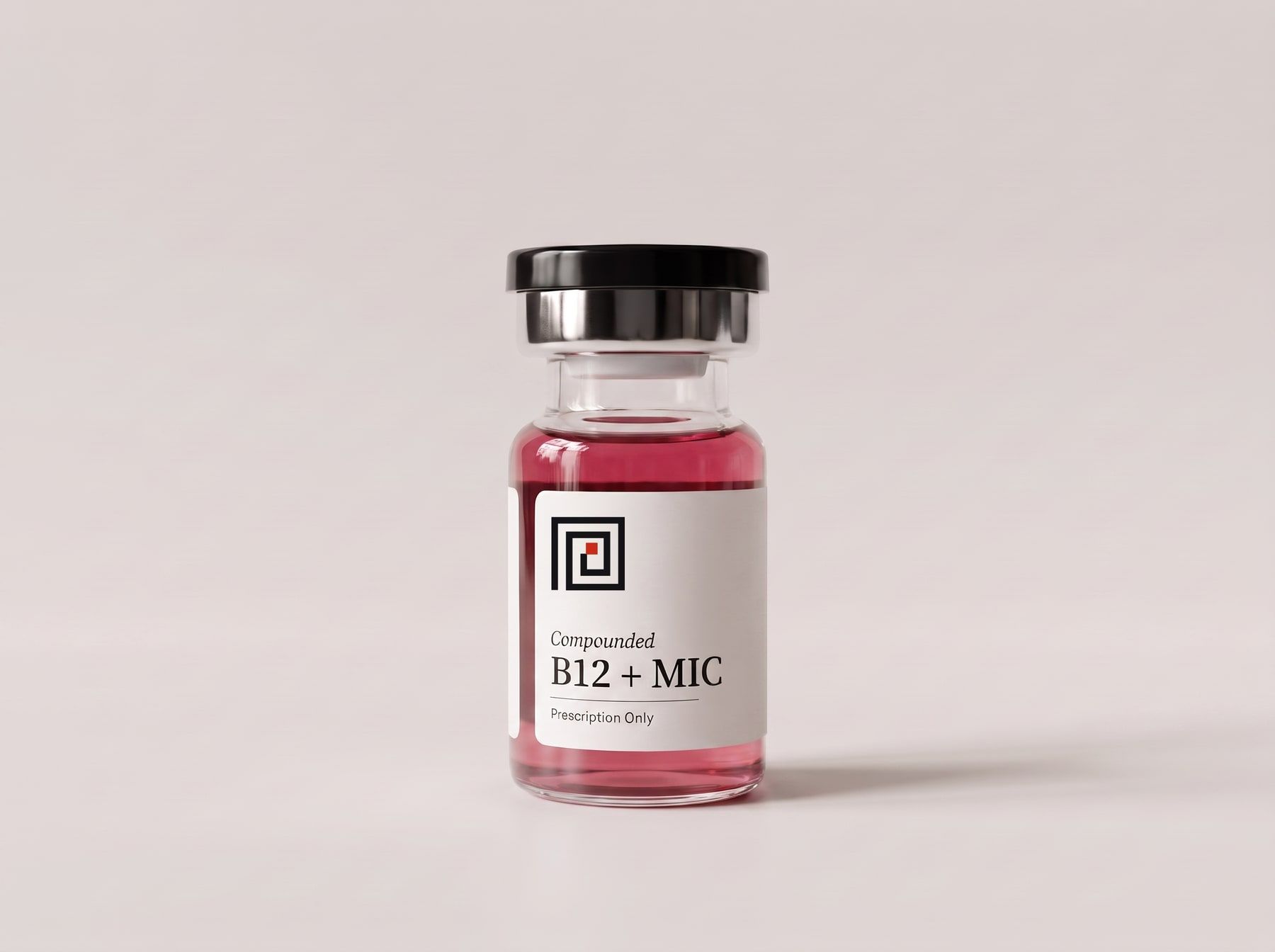
If your B12 is low, your provider will look for the cause and choose the right form. For people who absorb B12 poorly from the gut, injections bypass the problem. THINKR offers provider-prescribed B12 injections, combined with the nutrients methionine, inositol and choline (MIC), after an online evaluation.
Good to know
Supplements can interact with medicines and health conditions. Talk with your provider before starting one, especially if you take prescription medicine, are pregnant or breastfeeding, or have kidney, liver or bleeding problems.
References
Compounded medications are not FDA-approved. Prescriptions are issued only at a licensed provider’s discretion. This article is for information, not medical advice.
How we write
Articles are written by THINKR’s care team. They explain how care works and what research does and doesn’t show; they are general information, not medical advice, and your provider can tell you what applies to you. We update articles when guidance changes. Questions or corrections: support@thinkrmd.com.