
What to Take With Glutathione (and What to Keep Apart)
Two nutrients help glutathione work: vitamin C and selenium. One is worth keeping a few hours away: iron. What the research shows and how to take them.
Related treatments
Key takeaways
- Vitamin C and glutathione recycle each other. In one study, 500 mg of vitamin C a day raised glutathione in red blood cells by nearly 50%.
- Selenium is needed to make glutathione peroxidase, the enzyme that lets glutathione neutralise peroxides. One or two Brazil nuts a day can cover it.
- Keep iron supplements a few hours apart from glutathione or NAC, and take iron only if your labs show you need it.
Glutathione is the main antioxidant inside your cells. It doesn’t work alone: it relies on a few nutrients to stay active, and some supplements can work against it if you take them at the same time. Here are two worth pairing with glutathione and one to keep apart.
1. Vitamin C: the recycling partner
When glutathione neutralises a free radical, it becomes “used” (oxidised) and has to be recycled before it can work again. Vitamin C and glutathione work as a team: glutathione turns used vitamin C back into its active form, and vitamin C takes some of the load off glutathione, so more of it stays in its active form (Meister, 1994 (opens in a new tab)).
This shows up in people. In a double-blind study, healthy adults who took 500 mg of vitamin C a day for two weeks had nearly 50% more glutathione in their red blood cells. A higher dose of 2,000 mg did no better, and levels fell back once they stopped (Johnston et al., 1993 (opens in a new tab)).
How much: about 500 mg a day from food, a supplement or both. Oranges, kiwi, strawberries, red peppers and broccoli are all rich sources.
Upper limit: 2,000 mg a day for adults. More can upset your stomach and adds nothing here (NIH Office of Dietary Supplements (opens in a new tab)).
2. Selenium (or Brazil nuts): the enzyme switch
Selenium is a mineral your body needs to build glutathione peroxidase, a family of enzymes that use glutathione to break down hydrogen peroxide and other harmful peroxides (Brigelius-Flohé & Maiorino, 2013 (opens in a new tab)). Without enough selenium, you can have glutathione but not the enzyme that puts much of it to work.
Brazil nuts are the richest food source. In a 12-week randomized trial, 2 Brazil nuts a day raised blood selenium by 64% and glutathione peroxidase activity at least as well as a 100 mcg selenium supplement (Thomson et al., 2008 (opens in a new tab)).
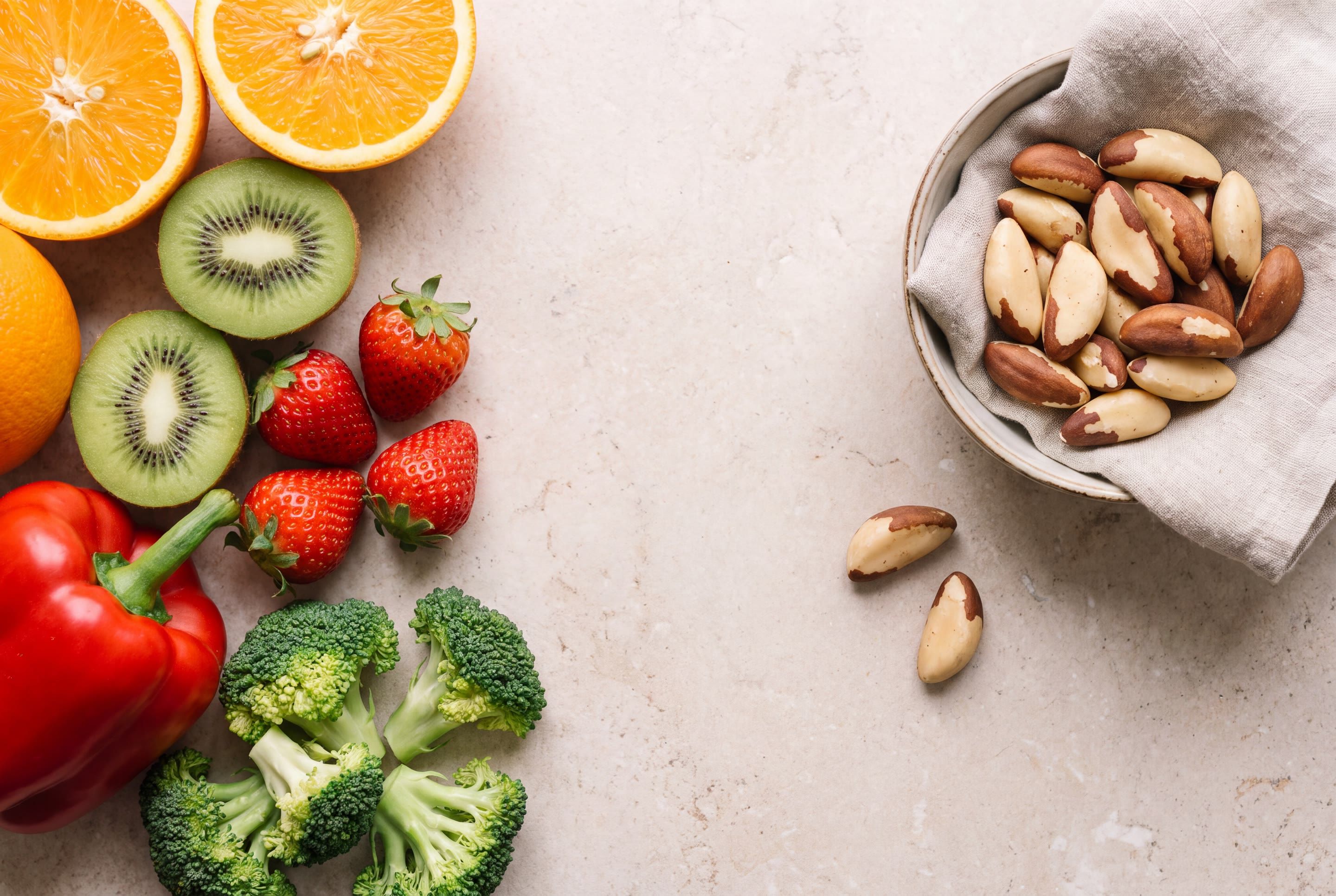
How much: adults need 55 mcg a day. One Brazil nut can hold 68–91 mcg, so 1–2 nuts a day is plenty (NIH Office of Dietary Supplements (opens in a new tab)).
Don’t overdo it: the upper limit is 400 mcg a day. Selenium in Brazil nuts varies a lot from nut to nut, so a handful every day can go over. Too much can cause garlic-smelling breath, brittle hair and nails, and stomach upset.
Pick one source: if you already take a multivitamin or selenium supplement with selenium in it, check the total before adding Brazil nuts.
What to keep apart: iron
Iron is reactive. In the presence of hydrogen peroxide, free iron can set off a reaction (called the Fenton reaction) that creates some of the most damaging free radicals there are (Winterbourn, 1995 (opens in a new tab)). Antioxidants like glutathione, NAC and vitamin C can also feed this reaction by keeping iron in its reactive form, which may use up the antioxidant you meant to protect yourself with.
Evidence that this matters in people taking ordinary doses is limited, so think of it as a sensible precaution:
Space them out: take iron supplements a few hours apart from glutathione or NAC, for example iron in the morning and glutathione later in the day.
Only take iron if you need it: many adults, especially men and women after menopause, don’t. Extra iron that your body doesn’t need can build up over time. Ask for a ferritin test before you start (NIH Office of Dietary Supplements (opens in a new tab)).
Good to know
If your provider has prescribed iron for low iron or anemia, keep taking it. Just ask whether to space it from glutathione or NAC. Tell your provider about every supplement you take, especially if you have kidney disease, a thyroid condition or take medicines that affect bleeding.
Also worth knowing: the building blocks
Glutathione is made from three amino acids: glutamate, cysteine and glycine. In older adults with low glutathione, two weeks of cysteine (as NAC) and glycine supplements raised glutathione by 95% (Sekhar et al., 2011 (opens in a new tab)). Vitamin C and selenium help glutathione work; NAC and glycine help your body make it.
If you want to support glutathione directly, THINKR’s providers can discuss glutathione therapy as part of a plan built around your labs, and check how it fits with the supplements you already take.
References
Compounded medications are not FDA-approved. Prescriptions are issued only at a licensed provider’s discretion. This article is for information, not medical advice.
How we write
Articles are written by THINKR’s care team. They explain how care works and what research does and doesn’t show; they are general information, not medical advice, and your provider can tell you what applies to you. We update articles when guidance changes. Questions or corrections: support@thinkrmd.com.