NAD+ Injections vs. Nasal Spray vs. Oral Precursors: Which Delivery Method Fits Your Goals?
NAD+ can be taken by injection, as a nasal spray, by IV, or indirectly through oral precursors such as NR and NMN. Here is how they differ, what is known, and how to choose with a provider.
Related treatments
Key takeaways
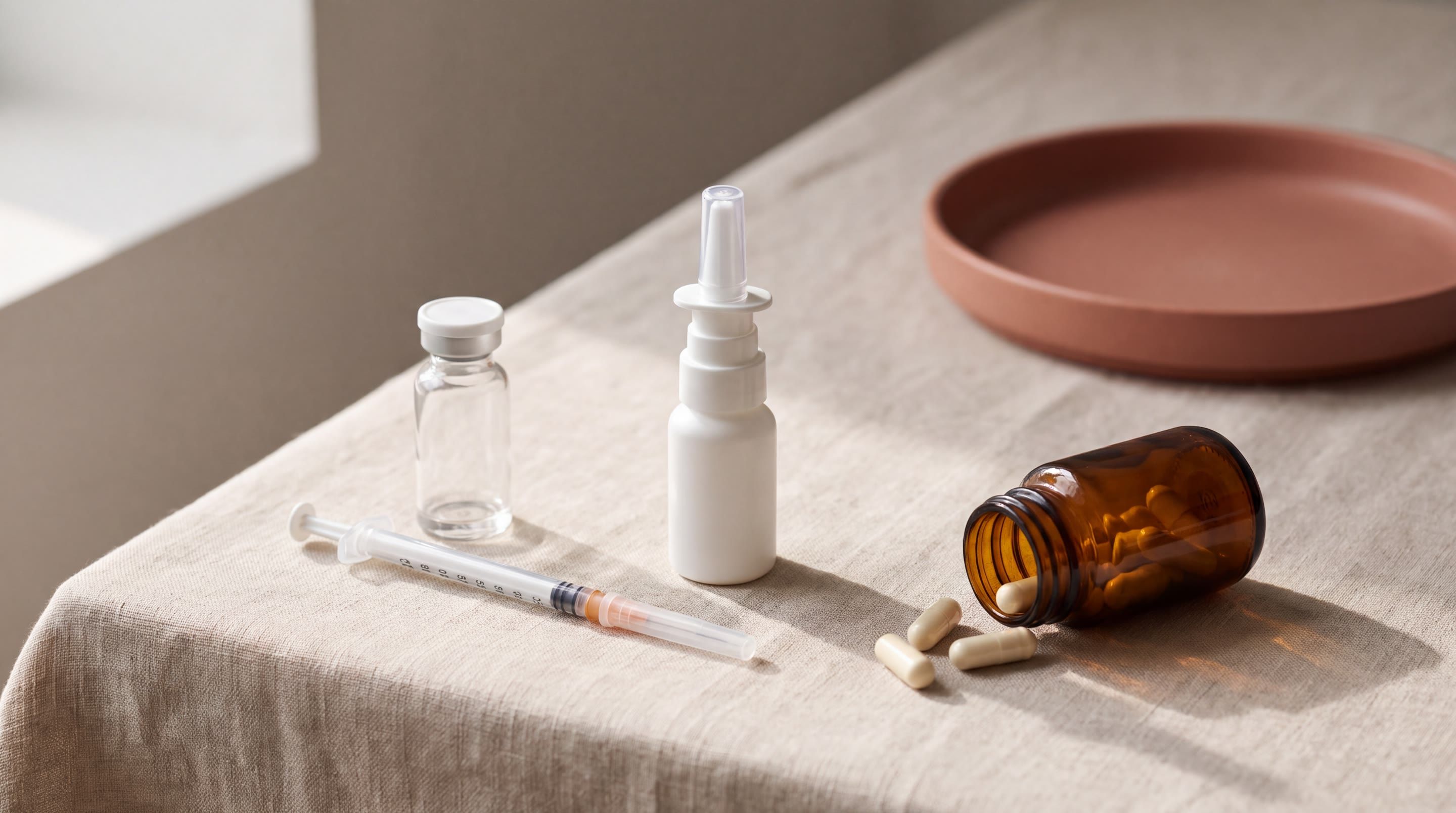
- Injections, nasal sprays and IV infusions deliver NAD+ itself; oral precursors such as NR and NMN give your body ingredients to make it.
- They differ in how NAD+ reaches your body, how often you take them, where, and who oversees them.
- Research comparing these routes directly in people is limited, so claims that one is clearly “best” go beyond the evidence.
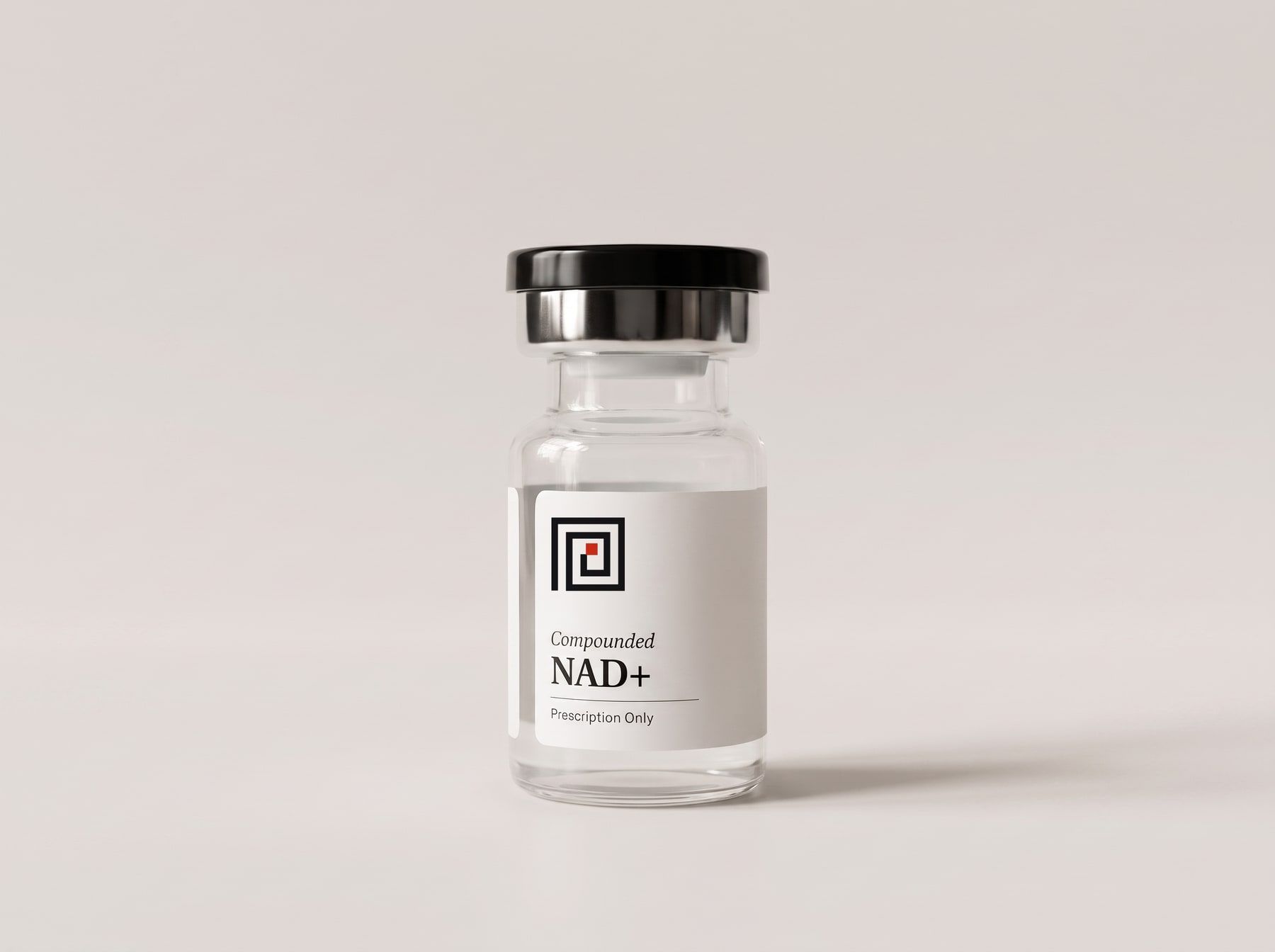
- THINKR offers NAD+ as an injection under the skin, prescribed and monitored by a licensed provider.
NAD+ is a coenzyme every cell uses in energy metabolism. If you are considering supporting it, you will quickly meet four very different options. They are not interchangeable, and the right one depends on your goals, your health and how much oversight you want.
The four main routes
Route | How it reaches your body | Typical setting | Who oversees it |
|---|---|---|---|
Injection under the skin | NAD+ is absorbed from the tissue under the skin, bypassing the gut. | At home, a few times a week | A licensed provider prescribes and monitors it |
IV infusion | NAD+ goes directly into a vein, slowly, over a period of hours. | In a clinic | The clinic’s provider |
Nasal spray | NAD+ is absorbed through the lining of the nose. | At home, often daily | A prescriber, when compounded |
Oral precursors (NR, NMN) | Capsules provide building blocks the body can use to make NAD+. | At home, daily | Sold as supplements; no medical review is required |
Injection under the skin
A small injection under the skin, usually two to three times a week. Because it doesn’t pass through the gut, the dose doesn’t depend on digestion. It takes a minute at home and fits a normal week. Common side effects include injection-site redness or soreness, flushing and nausea. This is the form THINKR offers.
IV infusion
IV NAD+ is given in a clinic, slowly, over a period of hours. Infusions are often slowed down if someone feels flushing, chest tightness or nausea. It requires clinic visits and several hours per session.
Nasal spray
Nasal sprays are convenient and needle-free. Research on how much NAD+ is absorbed this way, and how consistently, is limited. Some people find the spray irritating to the nose.
Oral precursors
Nicotinamide riboside (NR) and nicotinamide mononucleotide (NMN) are taken as capsules. They are not NAD+ itself: the body converts them. They are widely available without a prescription, which also means no one is reviewing whether they suit you or checking quality.

How to choose
There is no single right answer, and direct comparisons between these routes in people are limited. Useful questions to discuss with a provider:
What are you hoping will change, and how will you know?
Are you comfortable with a small injection a few times a week?
Do you want provider oversight, follow-up and a planned reassessment?
What else do you take, and what is your health history?
What fits your budget and your week?
Good to know
Whatever you choose, tell your provider about every supplement and medicine you take.
NAD+ at THINKR
THINKR’s NAD+ is an injection under the skin, prescribed only after a licensed provider reviews your evaluation, compounded by a licensed U.S. pharmacy and shipped to you with everything you need. Your care team checks in and your provider reassesses the plan with you.
Compounded medications are not FDA-approved. Prescriptions are issued only at a licensed provider’s discretion. This article is for information, not medical advice.
How we write
Articles are written by THINKR’s care team. They explain how care works and what research does and doesn’t show; they are general information, not medical advice, and your provider can tell you what applies to you. We update articles when guidance changes. Questions or corrections: support@thinkrmd.com.