
Semax Nasal Spray and the Brain: What the Research Shows
A peptide nasal spray developed in Russia and talked about for focus. What it is, what the studies found, where the evidence runs thin, and where it stands with the FDA.
Related treatments
Key takeaways
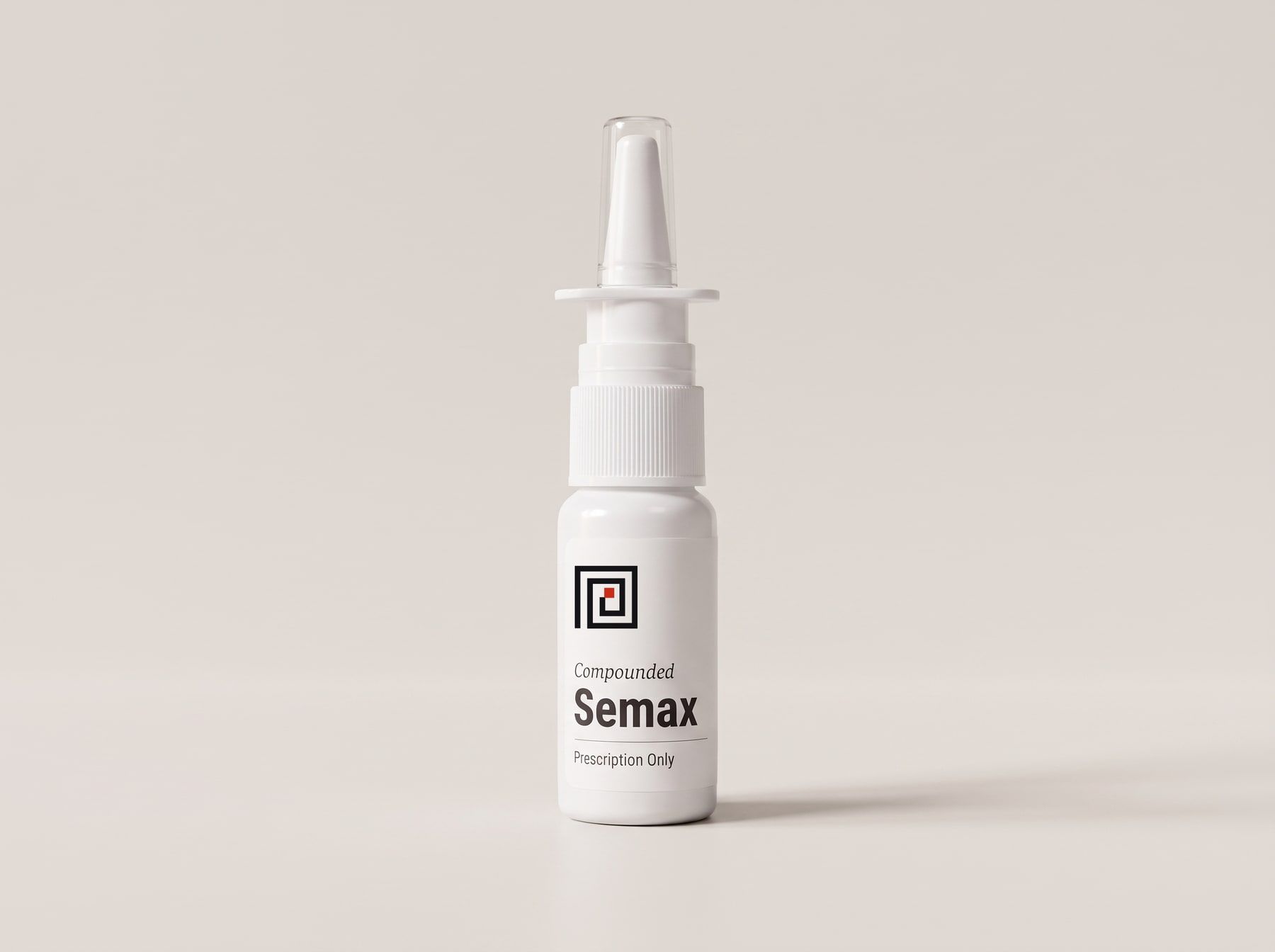
- Semax is a seven-amino-acid peptide based on a fragment of ACTH, taken as a nasal spray. It is approved as a medicine in Russia, not in the U.S.
- In rats, a single dose raised BDNF, a protein that supports learning and nerve-cell connections, in the brain’s memory center.
- Most human studies are Russian and in patients with stroke or other conditions; research in healthy adults is very limited.
- It is not FDA-approved. In July 2026 an FDA advisory committee voted 8–5 to recommend allowing it in compounding, but the FDA has not yet acted.
Semax is a short peptide, seven amino acids long, developed in Russia in the 1980s and 1990s from a fragment of ACTH (adrenocorticotropic hormone). Its developers removed the hormone’s effects on stress hormones and kept the part linked to attention and memory, then added a short tail that makes it last longer. It is taken as a nasal spray, and in Russia it is an approved medicine, used mainly in stroke care (Ashmarin et al., 1997 (opens in a new tab)).
How it may work
The leading explanation involves BDNF (brain-derived neurotrophic factor), a protein that helps nerve cells survive, grow and form new connections, and that is central to learning. In rats, a single nasal dose of Semax raised BDNF protein in the hippocampus, the brain’s memory center, by up to 1.4 times and activated its receptor, and treated animals learned a conditioned task better (Dolotov et al., 2006 (opens in a new tab)).

What the human studies found
Who was studied | What was found |
|---|---|
Healthy men under demanding conditions (Russian research summary) | Better attention and working memory reported, lasting up to about a day after a dose (Ashmarin et al., 1997) |
24 healthy adults, average age 44, Semax or placebo | Brain scans showed changes in the default mode network, a brain system active during rest and reflection, within 20 minutes (Lebedeva et al., 2018) |
Patients after ischemic stroke | Faster recovery of neurological function in early studies; in a 2018 study of 110 patients, Semax raised blood BDNF and improved daily-function scores during rehabilitation (Gusev et al., 1997; 2018) |
These results are encouraging but limited. The healthy-adult scan study (Lebedeva et al., 2018 (opens in a new tab)) measured brain activity, not thinking performance. The stroke studies (Gusev et al., 1997 (opens in a new tab); Gusev et al., 2018 (opens in a new tab)) looked at recovery after brain injury, which is a different question from sharpening a healthy brain. A 2026 review of peptides in healthy aging grouped Semax with peptides that show promising early evidence but lack long-term safety data and rigorous trials (Mavrych et al., 2026 (opens in a new tab)).
Safety and side effects
Reported side effects include nasal irritation or dryness, headache, restlessness, irritability and trouble sleeping. Long-term safety in healthy adults hasn’t been established, and little is known about how it combines with stimulants, antidepressants or anxiety medicines.
Where it stands with the FDA
Semax is not FDA-approved. For U.S. pharmacies to compound it, the FDA must add it to the list of substances allowed in compounding. In July 2026, an FDA advisory committee voted 8–5 to recommend adding Semax for cognitive and neurological conditions, against the advice of FDA staff, who raised concerns about how well these peptides are characterized. The vote isn’t binding, and formal rulemaking is still required (DLA Piper, 2026 (opens in a new tab); FDA (opens in a new tab)).
Important
Avoid Semax sold online “for research use only.” These products aren’t made by licensed pharmacies, their contents and purity aren’t verified, and no provider reviews whether they are safe for you. Don’t use Semax if you are pregnant or breastfeeding, have a seizure disorder, a history of cancer or a serious psychiatric condition.
If you’re struggling with focus, the first steps are usually the least exciting: sleep, labs and a look at medicines and stress. THINKR’s providers start there, and can discuss prescription options for focus where appropriate.
References
Compounded medications are not FDA-approved. Prescriptions are issued only at a licensed provider’s discretion. This article is for information, not medical advice.
How we write
Articles are written by THINKR’s care team. They explain how care works and what research does and doesn’t show; they are general information, not medical advice, and your provider can tell you what applies to you. We update articles when guidance changes. Questions or corrections: support@thinkrmd.com.