
The Morning Glass: A 2-Minute Hydration Routine
Water, a lemon, a pinch of sea salt and a spoon of apple cider vinegar. The recipe, why it’s worth doing first thing, and the honest truth about “alkalizing” your body.
Related treatments
Key takeaways
- Start the day with 16–20 oz of water, the juice of 1 lemon, ¼ tsp of mineral sea salt and 1 tbsp of apple cider vinegar.
- Even mild dehydration (about 1.5% of body weight) has been shown to lower concentration and mood.
- Food and drink don’t change your blood pH. The real benefits are hydration, a little sodium, and vinegar’s modest effect on blood sugar after meals.
- Lemon and vinegar are acidic: protect your teeth, and check with your provider if you watch your salt or take diabetes medicine.
Some habits are worth protecting no matter how busy the day gets. This is one of ours: a glass of water before coffee, before email, before anything. You wake up after seven or eight hours without a drink, and your brain notices. In controlled studies, mild dehydration of around 1.5% of body weight made men slower and less accurate on attention and working-memory tests (Ganio et al., 2011 (opens in a new tab)) and left women with lower concentration, a worse mood and more headaches (Armstrong et al., 2012 (opens in a new tab)).
The recipe
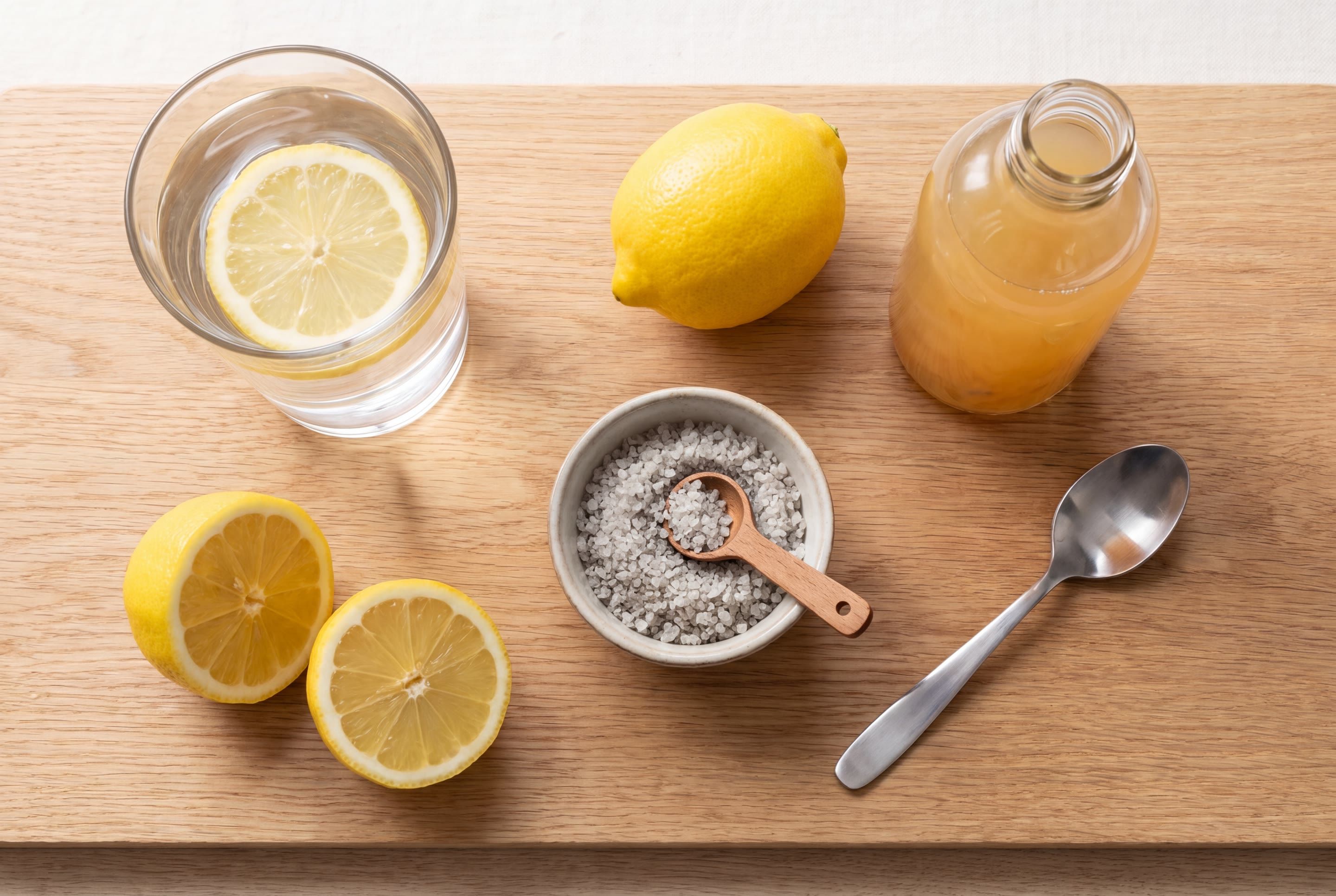
Water: 16–20 oz, room temperature or cool.
Lemon: the juice of 1 fresh lemon.
Sea salt: ¼ tsp of mineral sea salt, such as Baja Gold.
Apple cider vinegar: 1 tbsp of raw, unfiltered vinegar “with the mother”.
Stir and drink it over 10 to 15 minutes, before your first coffee.
What each ingredient does
Water replaces what you lost overnight. That is most of the benefit.
Lemon adds flavor (which helps you actually drink it) and a little vitamin C.
Sea salt adds sodium, an electrolyte that helps your body hold on to the water. Baja Gold lists about 450 mg of sodium per ¼ tsp, a fifth of the FDA’s 2,300 mg daily limit (FDA (opens in a new tab)). More is not better: 2 tsp would be about 3,600 mg, more than a whole day’s worth.
Apple cider vinegar contains acetic acid. In a small study, vinegar taken with a bread breakfast lowered the blood sugar and insulin spike afterwards and helped people feel fuller (Östman et al., 2005 (opens in a new tab)). It works best close to a meal, so have breakfast soon after.
About “alkalizing” your body
This drink is often sold as a way to make your body alkaline. That part isn’t true. Your lungs and kidneys hold your blood pH between about 7.35 and 7.45 whatever you eat. Food and drink can change the pH of your urine, not your blood, and the evidence for health benefits from “alkaline” eating is thin (Schwalfenberg, 2012 (opens in a new tab)). Lemon and vinegar are, in fact, acids. Drink it for hydration, not pH.
Protect your teeth
Vinegar can dissolve minerals from tooth enamel in lab tests (Willershausen et al., 2014 (opens in a new tab)), and lemon juice is acidic too. Always dilute both, use a straw if you like, rinse with plain water afterwards, and wait about 30 minutes before brushing.
Good to know
Check with your provider first if you have high blood pressure, heart failure or kidney disease (because of the salt), take insulin or other diabetes medicine (vinegar may lower blood sugar after meals), or have reflux or stomach ulcers.
References
Compounded medications are not FDA-approved. Prescriptions are issued only at a licensed provider’s discretion. This article is for information, not medical advice.
How we write
Articles are written by THINKR’s care team. They explain how care works and what research does and doesn’t show; they are general information, not medical advice, and your provider can tell you what applies to you. We update articles when guidance changes. Questions or corrections: support@thinkrmd.com.